The Second Sunday after the Epiphany
The Good Wine Kept until Now · The Beginning of Signs
Epiphany is the season in which the Church celebrates the manifestation of Christ’s divine glory to all nations. In the fifth century Coelius Sedulius gathered the season’s historic manifestations into a single hymn: the Magi before Herod, the Baptism in the Jordan, and the water made wine at Cana. On the Second Sunday after the Epiphany the one-year lectionary gives the Church the last of these, the wedding at Cana, which St. John calls the beginning of Jesus’ signs (John 2:11). The Altar Book offers alternate lessons (Exodus 33 or Amos 9; Ephesians 5 or Romans 12). This primer follows Amos 9:11–15 and Romans 12:6–16. The day turns on the steward’s surprise at the feast: why would anyone keep the good wine until now?
Lectionary Primer PDF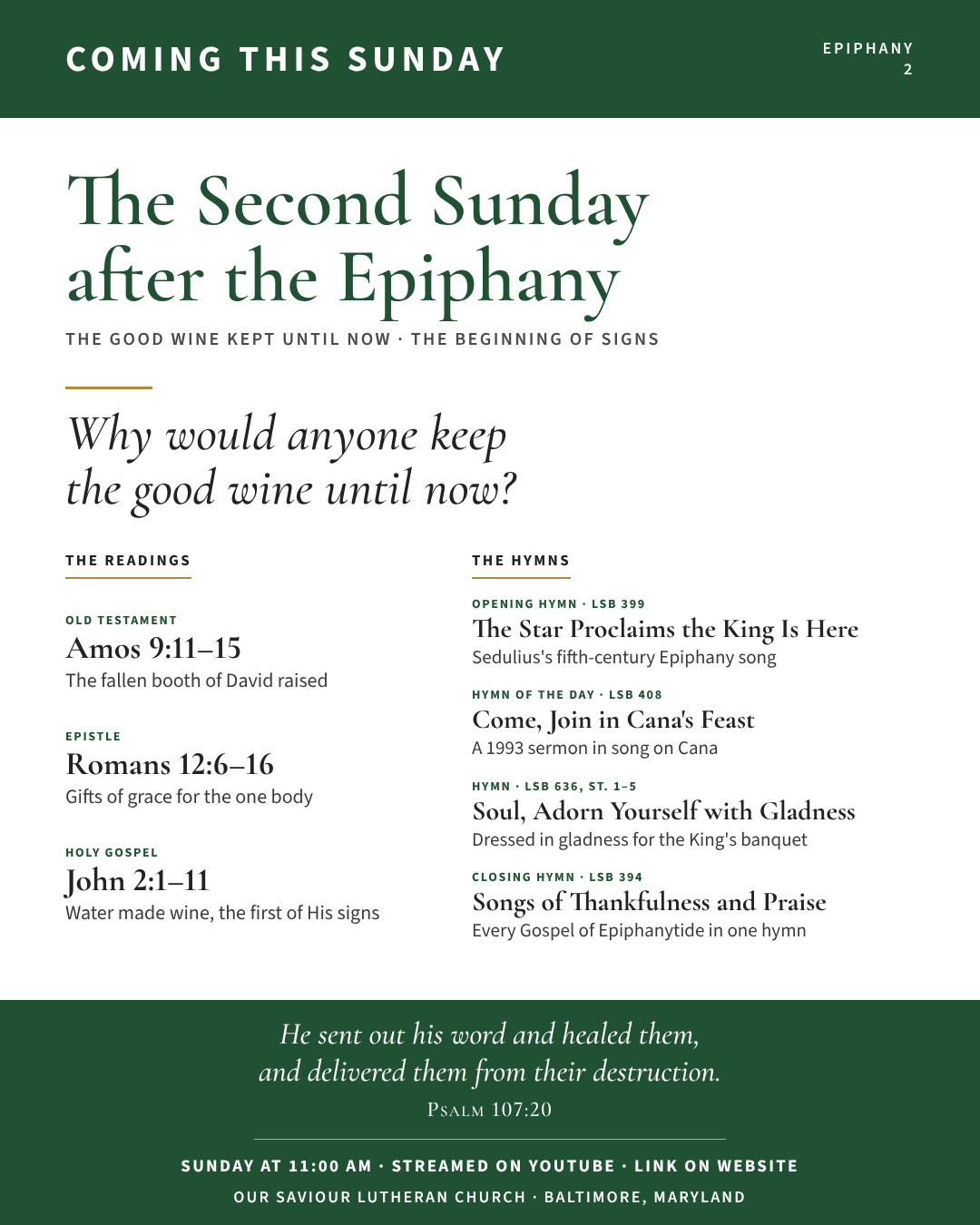
The shape of the service
The Introit (Psalm 66) calls the whole earth to worship: “All the earth worships you and sings praises to you; they sing praises to your name.” Its middle verse sets the tone for the Gospel: “Come and see what God has done.”
The Collect of the Day addresses the God “who governs all things in heaven and on earth,” asking Him to hear the prayers of His people and to “grant us Your peace through all our days.”
The Gradual (Psalm 107:20–21) answers the Old Testament: “He sent out his word and healed them, and delivered them from their destruction.” The Alleluia Verse (Psalm 148:2) calls all His angels and hosts to praise Him.
The Setting. Divine Service, Setting Three (LSB p. 184). The paraments are green, and the minister uses the Proper Preface for the Epiphany.
The readings at a glance
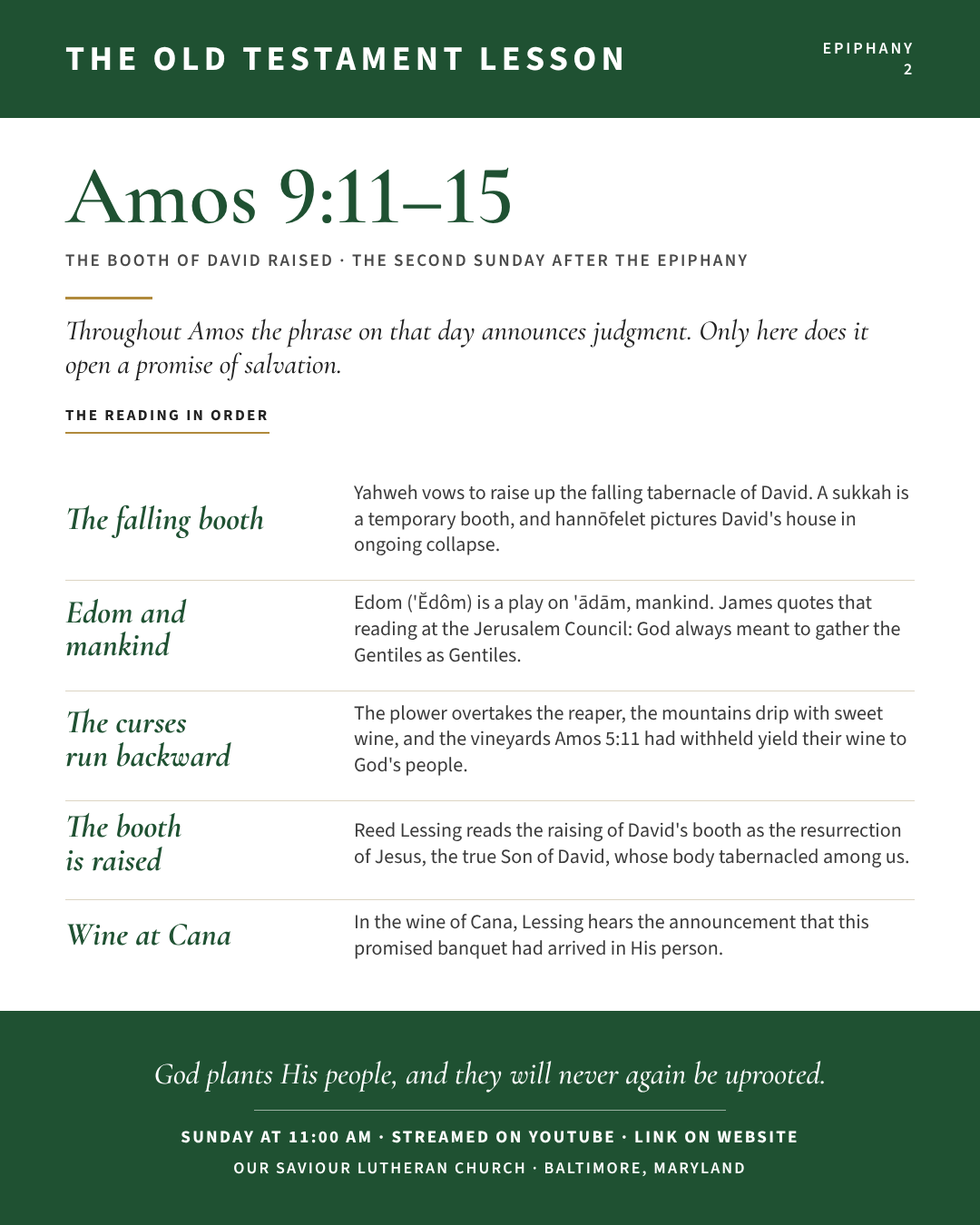
Throughout Amos the phrase “on that day” (bayyôm hahû’) announces judgment; only here does it open a promise of salvation. Yahweh vows, “I will raise up the falling tabernacle of David.” A sukkah is a temporary booth, the word used for the Feast of Booths, and the participle hannōfelet pictures David’s house in ongoing collapse, which God alone will raise. Edom (’Ĕdôm) is a play on ’ādām, “mankind”; the Septuagint reads it so, and James quotes that reading at the Jerusalem Council (Acts 15:16–17) to show that God always meant to gather the Gentiles as Gentiles, without the yoke of Moses. Then the curses of the Law run backward. The plower overtakes the reaper, “the mountains will drip with sweet wine,” and the vineyards that Amos 5:11 had withheld now yield their wine to God’s people. Reed Lessing reads the raising of David’s booth as the resurrection of Jesus, the true Son of David, whose body “tabernacled” among us (John 1:14), and he hears in the wine of Cana the announcement that this promised banquet had arrived in His person. God plants His people, “and they will never again be uprooted.”
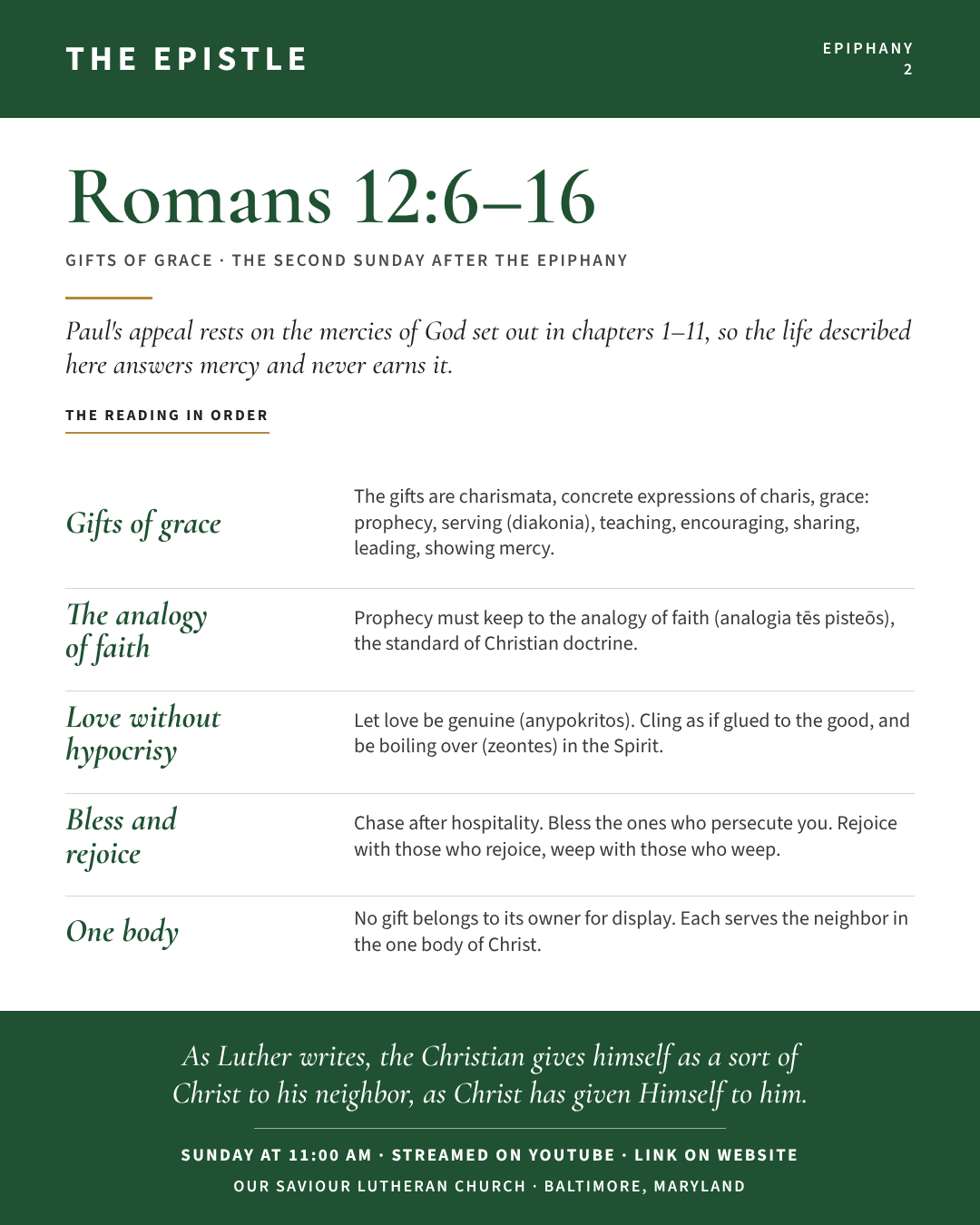
Paul’s appeal rests on “the mercies of God” (12:1) set out in chapters 1–11, so the life described here answers mercy and never earns it. The gifts are charismata, concrete expressions of charis, grace: prophecy, serving (diakonia), teaching, encouraging, sharing “with simplicity,” leading “with eagerness,” and showing mercy “with cheerfulness” (hilarotēs). Prophecy must keep to “the analogy of faith” (analogia tēs pisteōs), the standard of Christian doctrine. Paul then fires off a rapid chain of exhortations: “Let love be genuine” (anypokritos, without hypocrisy), cling as if glued to the good, be “boiling over” (zeontes) in the Spirit, chase after hospitality, “Bless the ones who persecute you,” and “Rejoice with those who rejoice, weep with those who weep.” No gift belongs to its owner for display. Each serves the neighbor in the one body of Christ, where, as Luther writes, the Christian gives himself “as a sort of Christ” to his neighbor, as Christ has given Himself to him.
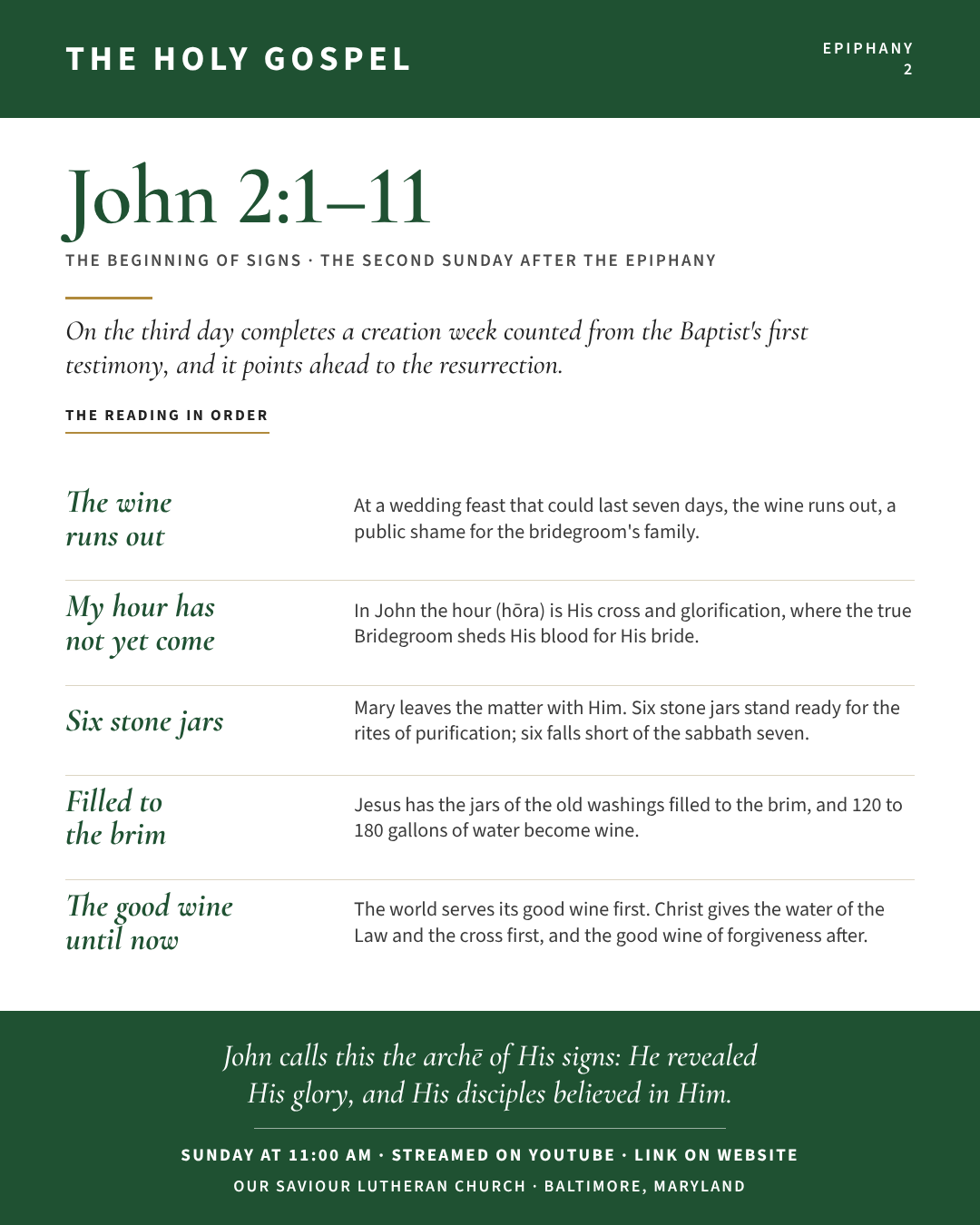
“On the third day” completes a creation week counted from the Baptist’s first testimony, and it also points ahead to the resurrection (2:19–22). At a wedding feast that could last seven days, the wine runs out, a public shame for the bridegroom’s family. Jesus answers, “My hour has not yet come.” In John the hour (hōra) is His cross and glorification, where the true Bridegroom sheds His blood for His bride. Mary leaves the matter with Him: “Whatever He tells you, do it.” Six stone jars stand ready for the Jewish rites of purification; stone could not contract uncleanness, yet six falls short of the sabbath seven. Jesus has the jars of the old washings filled to the brim, and 120 to 180 gallons of water become wine. The steward’s verdict, “you have kept the good wine until now,” is the Gospel in a sentence. Luther contrasts the world, which serves its good wine first, with Christ, who gives the water of the Law and the cross first and the good wine of forgiveness after. John calls this the archē of His signs (sēmeia), the pattern for all that follow: He “revealed His glory, and His disciples believed in Him.”
The hymns and their stories